
Pre-Decision Context Dossier
Define the question, evidence and constraints.
Fixed price to be confirmed
See scope and example02 / GiNOVA Decision Systems
See the question, the evidence and the alternatives together. GiNOVA structures complex information into decision briefs, tested assumptions and accountable next steps, with AI-assisted analysis under human review.
Financial decision diagnostics, in strategic collaboration with Trend Global Mali Müşavirlik
YOUR NEXT DECISION
Select your package to prepare an enquiry. The engagement begins with an agreed written scope.
Define the question, evidence and constraints.
Fixed price to be confirmed
See scope and exampleCompare the options and challenge the recommendation.
Fixed price to be confirmed
See scope and exampleTurn the decision into an accountable action plan.
Fixed price to be confirmed
See scope and exampleKeep decisions, evidence and follow-through under review.
Fixed price to be confirmed
See scope and example
A shared question and visible assumptions give the discussion a practical starting point.

Sources, alternatives and open questions stay visible when a recommendation is reviewed.

An agreed direction becomes named responsibilities, checks and the next action.
Illustrative scenes featuring Kunter and Lumina
APPLIED AI / HUMAN CONTROL
Start with what changed, who is affected and the decision that must be made. A signal is a question to investigate, not a conclusion.
Select a stage. Use arrow keys, Home or End.
Conceptual decision-workflow illustration. No live client data or trained-model performance is represented.
STRATEGIC COLLABORATION
GiNOVA × Trend Global Mali Müşavirlik. A joint financial-discovery and decision-support offer within the broader Decision Systems practice.

Trend Global coordinates authorized client relationships and agreed financial inputs, explains the accounting context and reviews financial interpretation within its professional mandate.
GiNOVA frames the decision, organizes sources and assumptions, develops AI-assisted comparisons and scenarios, and prepares a traceable decision brief for human review.
Both teams review the agreed output and its limits before authorized delivery. Roles, inputs, scope and commercial terms are agreed for each engagement; the client retains the decision.
This genuine archival excerpt shows a reporting format. It is independent analysis, not a joint-client engagement or proof of an AI model’s performance.
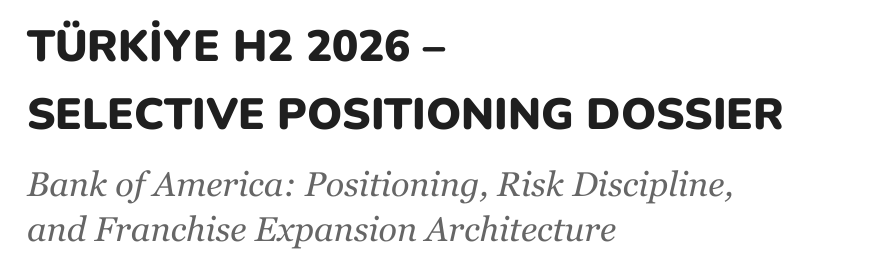
Title excerpt from page three of a genuine archival dossier. Independent analysis; not a claim of client commission.
Choose the question that matches the decision. The financial diagnostic is one entry point; each assignment needs its own scope and expertise.
Which cash-conversion or margin question needs investigation before the next commitment?
Which capacity, process or supplier constraint is preventing the agreed operating objective?
Which technical and commercial assumptions must hold before a proposed capital commitment?
When a disruption changes the plan, what is known, what remains uncertain and which management decisions cannot wait?
Which growth, market-entry or partnership option fits the organization’s constraints and evidence?
PAID INITIAL ENGAGEMENT / G-01
One defined management question. An agreed dataset and reporting period. One reviewed decision package. The written scope and fee are accepted before bespoke analysis begins.
Agree the entity, reporting period, decision owner and source list. Set document limits, clarification sessions and exclusions before data is shared.
Organize the agreed information, record inconsistencies and assumptions, and compare only the indicators or scenarios the available evidence can support.
Trend Global reviews financial context within its mandate; GiNOVA reviews evidence, analytical structure and AI-assisted output. Unresolved questions stay visible.
Findings, options, limitations, questions requiring resolution and a scoped next-stage proposal. No unsupported certainty or promised investment outcome.
The agreed question and deliverables, traceable sources, explicit assumptions and limits, and the contracted feedback/revision allowance. Extra entities, periods, data cleaning, scenarios or implementation require a scope change.
Entity and period count, data condition, analytical effort, professional review, reporting format and timing determine the proposal. No fixed public price or free bespoke analysis is promised.
Statutory audit, assurance, certification, tax/legal opinion, financial-product advice, guaranteed returns and ongoing implementation are not included. Any additional professional service needs its own agreed mandate.
ILLUSTRATIVE FILE STRUCTURE / NO CLIENT DATA
A worked structure for review, not a real client case, completed diagnostic or recommendation. No client figures or financial outcomes are used.
What should management investigate first when working-capital pressure may constrain a planned expansion?
Only the agreed entity and reporting period: an approved cash-flow summary, aggregated receivables ageing, inventory profile and expansion assumptions. Missing or unconfirmed inputs remain marked.
Receivables follow-up; inventory policy changes; a revised expansion sequence. These are hypotheses to assess, not selected actions.
Timing of cash needs, continuity of supply and operations, feasibility, execution responsibilities and sensitivity to unverified assumptions.
A short management Decision Brief, supported by a source/assumption register, option comparison, unresolved questions and a scoped next-step plan. The client retains the decision.
MOTION / GiNOVA
An existing GiNOVA introduction to the G-0 approach.
This browser could not open the video. You can open the video file directly.
GiNOVA promotional work; not evidence of a client implementation or outcome.
Open the video directlyGiNOVA Decision Systems
Choose the engagement around the decision you need to make, the evidence already available and the people accountable for acting on it.
We establish the question, decision owner, alternatives, constraints and conditions that would change the answer. The brief makes missing evidence and disagreements visible before a large analysis begins. It gives the team a shared basis for deciding what work is necessary.
The agreed dossier connects sources and assumptions to options, trade-offs and unresolved risks. A preferred route is accompanied by the case against it and the evidence that could reverse it. Where the available evidence cannot support a conclusion, that limitation is recorded explicitly.
An approved direction can be translated into owners, milestones and review gates. Acceptance criteria, dependencies and stop conditions are agreed with the responsible people. GiNOVA supports the decision process; the authorized client retains the decision and the responsibilities assigned to it.
For a first conversation, describe the decision, who must approve it, the date it matters, the options under consideration and the evidence you already have. We can then define the appropriate scope and output.
Decision situations
Select the situation closest to yours. GiNOVA begins with the decision itself — before the analysis, before the answer.
Method
Eight controlled stages. Each one gates the next. Select a stage to see what it governs.
Solutions
Defined scope, defined evidence, defined output. Each engagement is shaped around the decision and agreed responsibilities.
Standards
Before any recommendation is written, each claim in a GiNOVA dossier is classified and carried with its source. Conclusions inherit the discipline of the evidence beneath them.
A necessary distinction
Founder-led
GiNOVA remains responsible for its decision method and analytical work. In joint financial diagnostics, Trend Global’s financial-context and professional-review responsibilities are defined alongside GiNOVA’s in the written engagement. Named human owners review the output.
Meridian North
Meridian North is GiNOVA’s internal enterprise-design and quality-review framework. It governs positioning, language, evidence discipline, institutional presentation and strategic coherence across GiNOVA’s work.
Read our standards →No standing access to a partner’s client portfolio is implied. Each engagement defines which client-authorized information may be used, by whom and for what purpose.
Identify the decision owner, participating parties, permitted datasets, purpose and authorized recipients before any records move. AI/service-provider use requires the agreed, specific handling arrangements.
Name the data owner and handling roles. Agree minimum inputs, secure transfer and access, retention/deletion and incident contacts before intake. Remove unnecessary personal identifiers.
Use the brief only for the agreed purpose and recipients. Separate facts, assumptions, AI-assisted drafts and human conclusions; keep source limits visible. No onward publication, certification or guaranteed result is implied.
Trend Global: coordinates authorized financial inputs and professional context; reviews financial interpretation within its mandate.
GiNOVA: maintains analytical traceability, assumption boundaries and human review of AI-assisted decision work.
Joint delivery: named human owners agree the review and release gate; the client retains its decision authority. These arrangements must be established in the engagement, not assumed from this page.
Send a short non-confidential description first. Do not attach ledgers, payroll, bank records, tax files or client-identifying documents to this enquiry. Before data is provided, agree the client-authorized purpose, participating parties, minimum inputs, access, transfer, retention and any AI/service-provider use.
COMMISSION A DEFINED SCOPE
Describe the decision, engineering challenge or creative production you have in mind. The next step is a written scope covering deliverables, inputs, responsibilities, timing and price.